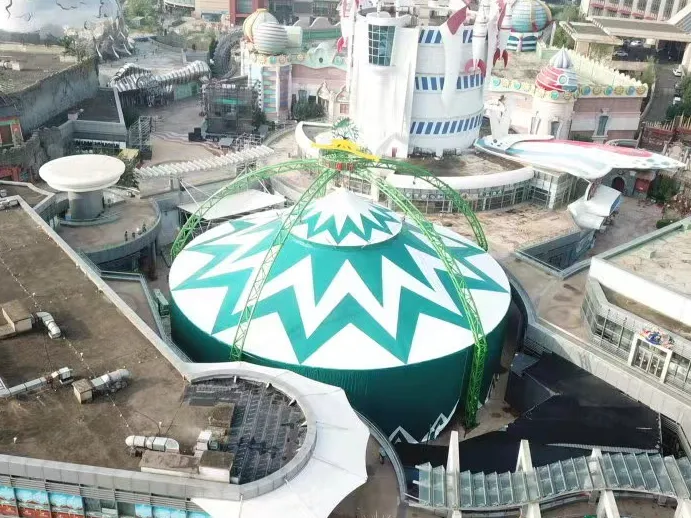
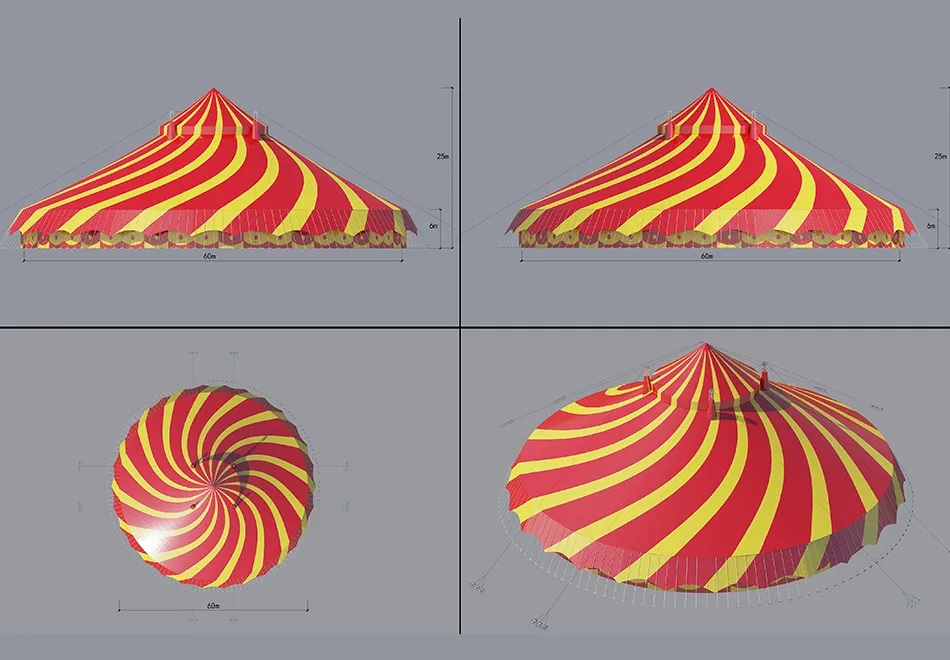
A circus tent, often referred to as a Big Top, is a large temporary structure designed to host circus performances, touring shows, and entertainment events. It combines structural engineering with flexible space design, allowing for quick installation, dismantling, and transportation.
Unlike conventional buildings, a circus tent is engineered to create a wide, open interior space without permanent foundations, making it ideal for traveling circuses and event organizers.
For professional circus teams and tent distributors, understanding the structure and variations of circus tents is essential when selecting the right solution for different performance and business needs.
Main Types of Circus Tents
Circus tents can be categorized based on their structural system. Each type offers different advantages depending on the application, location, and audience capacity.

Double Pole Circus Tent (Classic Big Top)
The double pole structure is the most traditional design, featuring two central masts that support the roof through a system of tensioned cables.
- Ideal for: traditional touring circuses
- Key feature: iconic peaked shape
- Advantage: strong visual identity and cost efficiency
Four Pole Circus Tent
This structure uses four central support poles to create a larger and more stable internal space.
- Ideal for: large-scale performances
- Key feature: increased span and height
- Advantage: better load distribution and higher capacity
Circus Tent with Arch Structure
Modern circus tents often adopt a U-shaped or arch frame system instead of central poles.
- Ideal for: contemporary events and premium shows
- Key feature: column-free interior space
- Advantage: flexible layout and improved audience visibility

External Hanging Circus Tent
This innovative structure transfers load to an external support system, eliminating internal columns.
- Ideal for: high-end performances and exhibitions
- Key feature: fully open interior
- Advantage: maximum usable space
Key Components of a Circus Tent
A professional circus tent is not just fabric and poles — it is a complete engineered system made up of several key components:
Structural Frame
Typically made from high-strength steel or aluminum, the frame provides the main load-bearing capacity.
Tent Fabric (Canopy)
Most modern circus tents use PVC-coated polyester or PVDF fabric (850–1100 g/m²), offering:
- Waterproof performance
- UV resistance
- Flame retardancy (B1/M2 standard)
Tensioning System
Steel cables and anchoring systems ensure stability under wind loads, often designed to withstand up to 100 km/h depending on configuration.
Interior Systems
Additional systems such as seating, stage platforms, flooring, and lighting structures are integrated to support full performance functionality.
Common Applications of Circus Tents
While traditionally used for circus performances, modern circus tents have expanded into a wide range of applications:
- Touring circus productions
- Festivals and carnivals
- Live performances and shows
- Temporary event venues
- Exhibition and promotional spaces
For distributors and rental companies, this versatility allows circus tents to serve multiple markets with a single investment.
How to Choose the Right Circus Tent
Selecting the right circus tent depends on several practical factors:
Span and Capacity
Determine the required diameter or width based on audience size and performance layout.
Structure Type
Choose between pole-supported or arch-supported systems depending on visibility and space requirements.
Site Conditions
Ground conditions, wind load requirements, and installation environment all influence the structural choice.
Business Model
- Touring circus → lightweight, fast installation
- Rental company → flexible and durable design
- Event organizer → aesthetics + branding
Final Thoughts
A circus tent is more than a temporary structure — it is a carefully engineered environment that combines performance, safety, and visual impact.
For circus operators and distributors, understanding different structures and materials is the first step toward selecting a reliable and scalable solution.
If you have specific requirements regarding size, structure, or application scenarios, you can share your project details for technical discussion and solution evaluation.